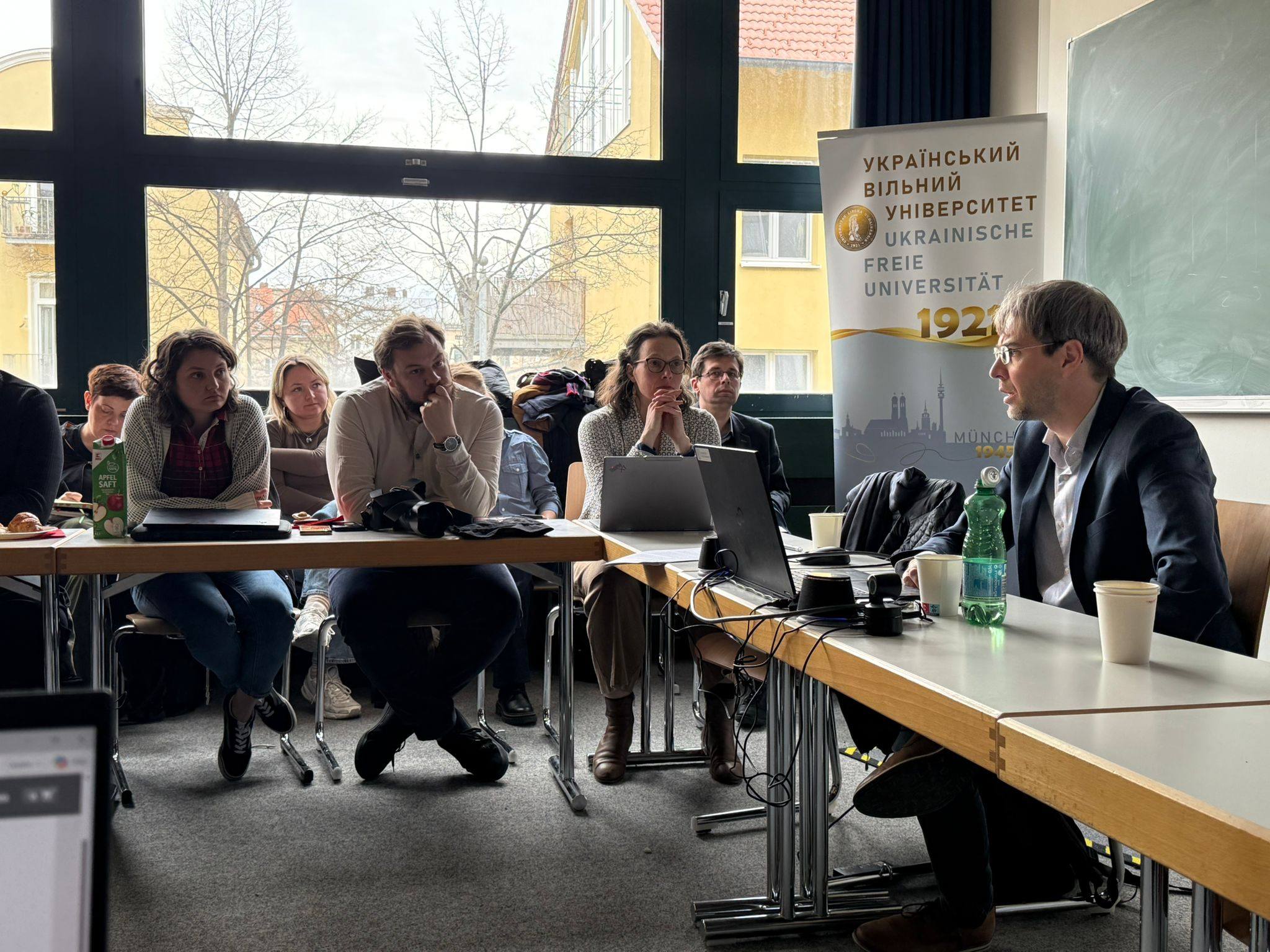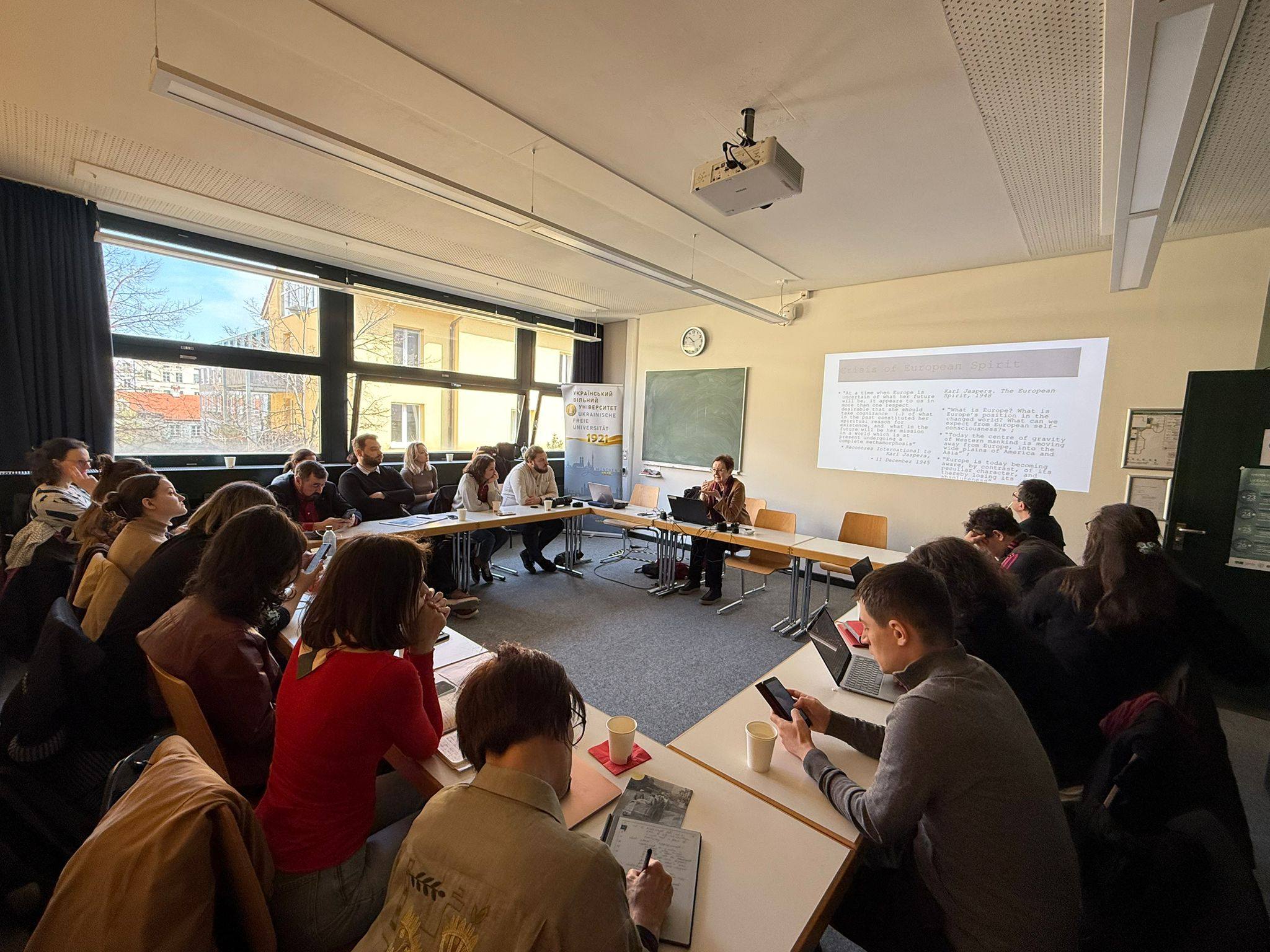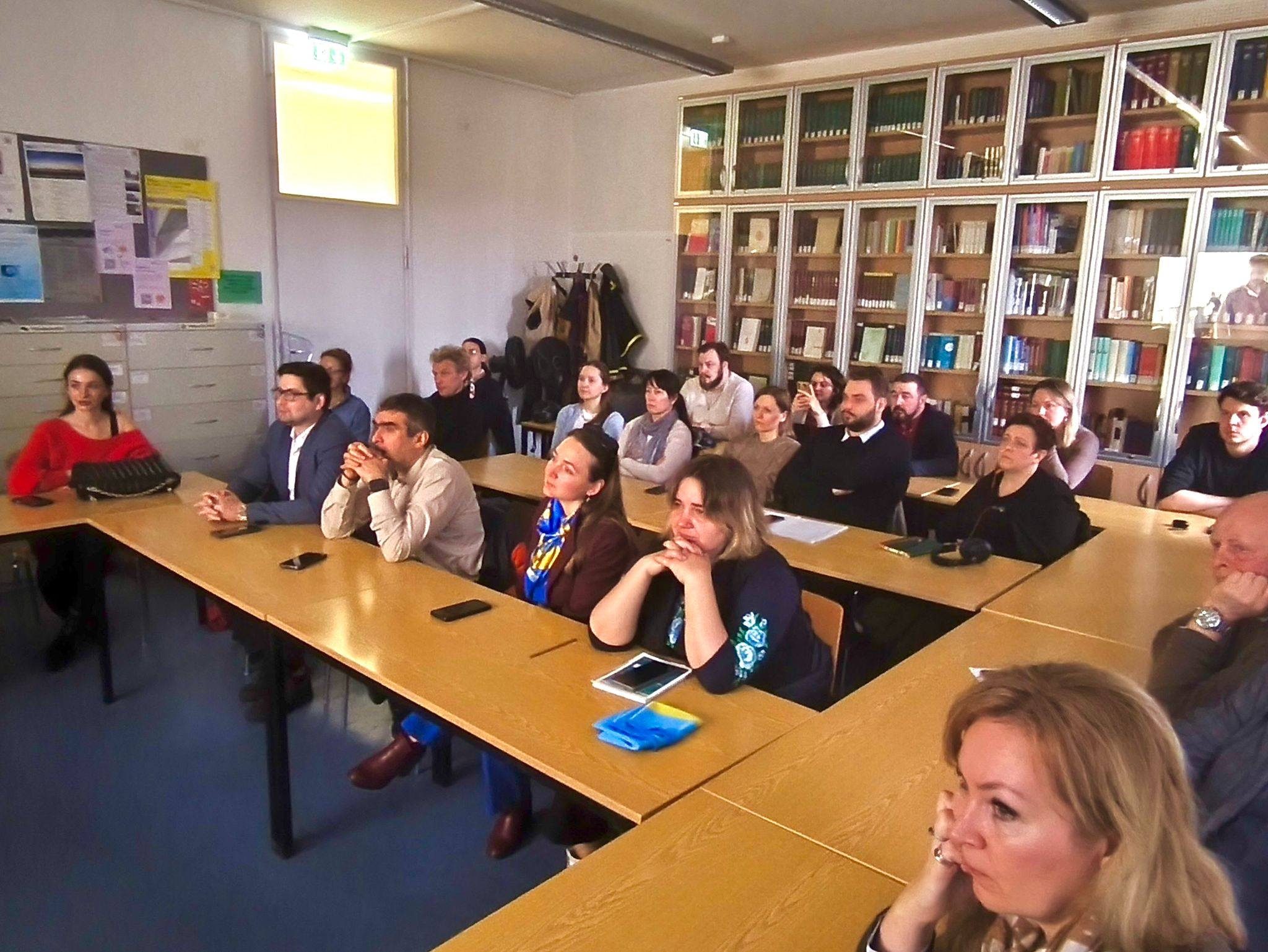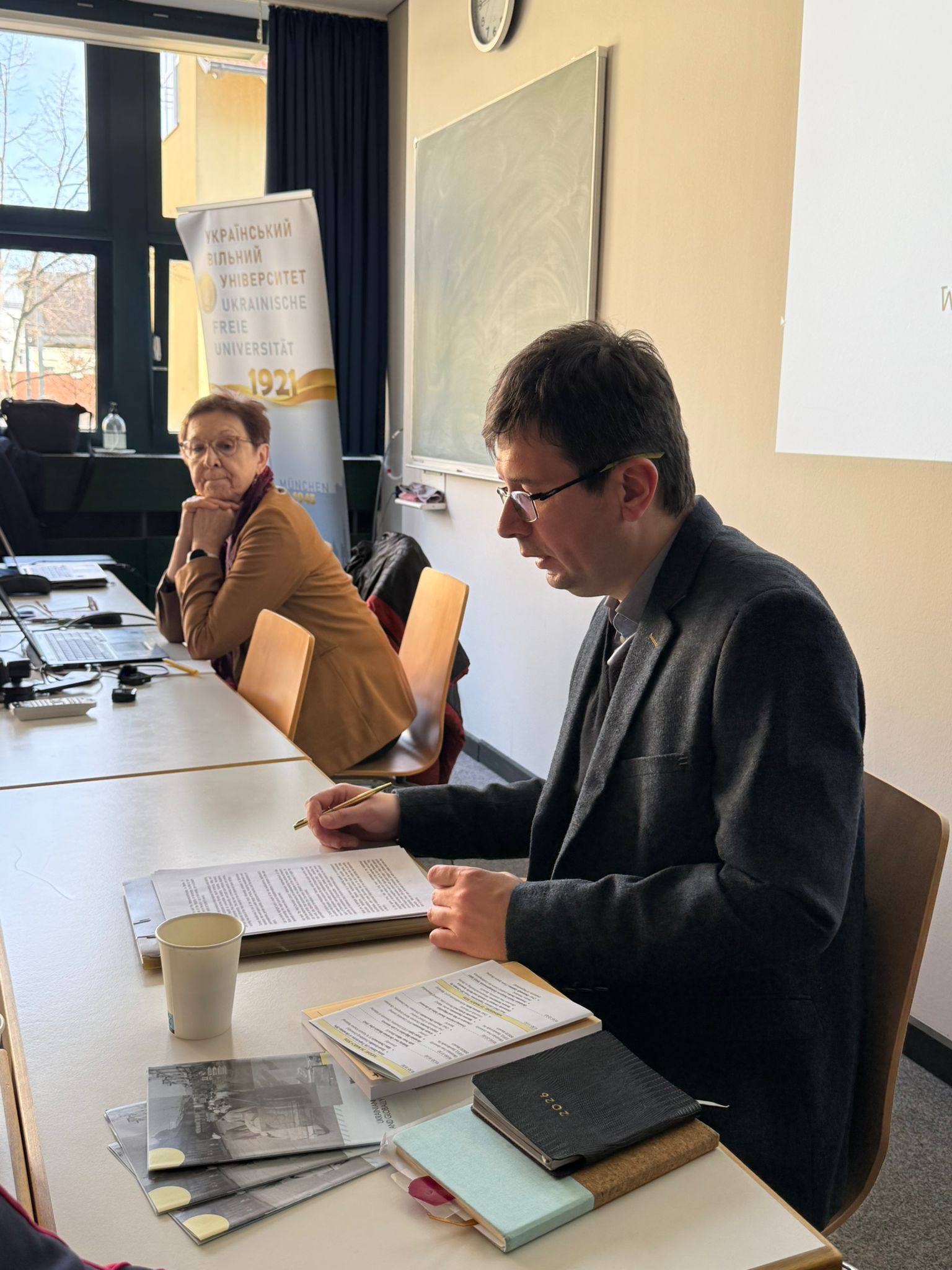
The third day of the 𝐖𝐢𝐧𝐭𝐞𝐫 𝐒𝐜𝐡𝐨𝐨𝐥 𝟐𝟎𝟐𝟔 was a profound journey through the “geography of the soul,” exploring how the Ukrainian identity has been preserved, challenged, and reshaped through literature and film.
MORNING: FROM DP CAMPS TO GLOBAL CAMPUSES
The academic program began with a deep dive into 𝐏𝐨𝐬𝐭-𝟏𝟗𝟒𝟓 𝐋𝐢𝐭𝐞𝐫𝐚𝐫𝐲 𝐓𝐫𝐚𝐣𝐞𝐜𝐭𝐨𝐫𝐢𝐞𝐬. Prof. Dr. Tamara Hundorova (Wissenschaftskolleg zu Berlin / UFU) masterfully traced the intellectual migration from Displaced Persons (DP) camps to university campuses across North America. This was followed by an insightful session on 𝐔𝐤𝐫𝐚𝐢𝐧𝐢𝐚𝐧-𝐏𝐨𝐥𝐢𝐬𝐡 𝐃𝐢𝐚𝐬𝐩𝐨𝐫𝐢𝐜 𝐄𝐧𝐭𝐚𝐧𝐠𝐥𝐞𝐦𝐞𝐧𝐭𝐬 (1945-1991) with Dr. Franziska Davies, chaired by Dr. Olexander Zabirko, which explored the complex but vital cooperation between neighboring diasporas during the Cold War.
𝐀𝐅𝐓𝐄𝐑𝐍𝐎𝐎𝐍: 𝐓𝐇𝐄 𝐆𝐋𝐎𝐁𝐀𝐋 𝐕𝐈𝐋𝐋𝐀𝐆𝐄
In the afternoon, Dr. Matthias Kaltenbrunner (LMU Munich) presented “𝐆𝐥𝐨𝐛𝐚𝐥 𝐕𝐢𝐥𝐥𝐚𝐠𝐞𝐫𝐬,” a fascinating study of 20th-century Ukrainian migration to North America. He illustrated how local village identities were transformed into a global Ukrainian network, bridging the gap between small ancestral homelands and the vastness of the new world.
𝐄𝐕𝐄𝐍𝐈𝐍𝐆 𝐇𝐈𝐆𝐇𝐋𝐈𝐆𝐇𝐓𝐒: ”𝐇𝐀𝐘𝐓𝐀𝐑𝐌𝐀“ 𝐀𝐍𝐃 𝐀 𝐃𝐈𝐀𝐋𝐎𝐆𝐔𝐄 𝐖𝐈𝐓𝐇 𝐀𝐊𝐇𝐓𝐄𝐌 𝐒𝐄𝐈𝐓𝐀𝐁𝐋𝐀𝐈𝐄𝐕
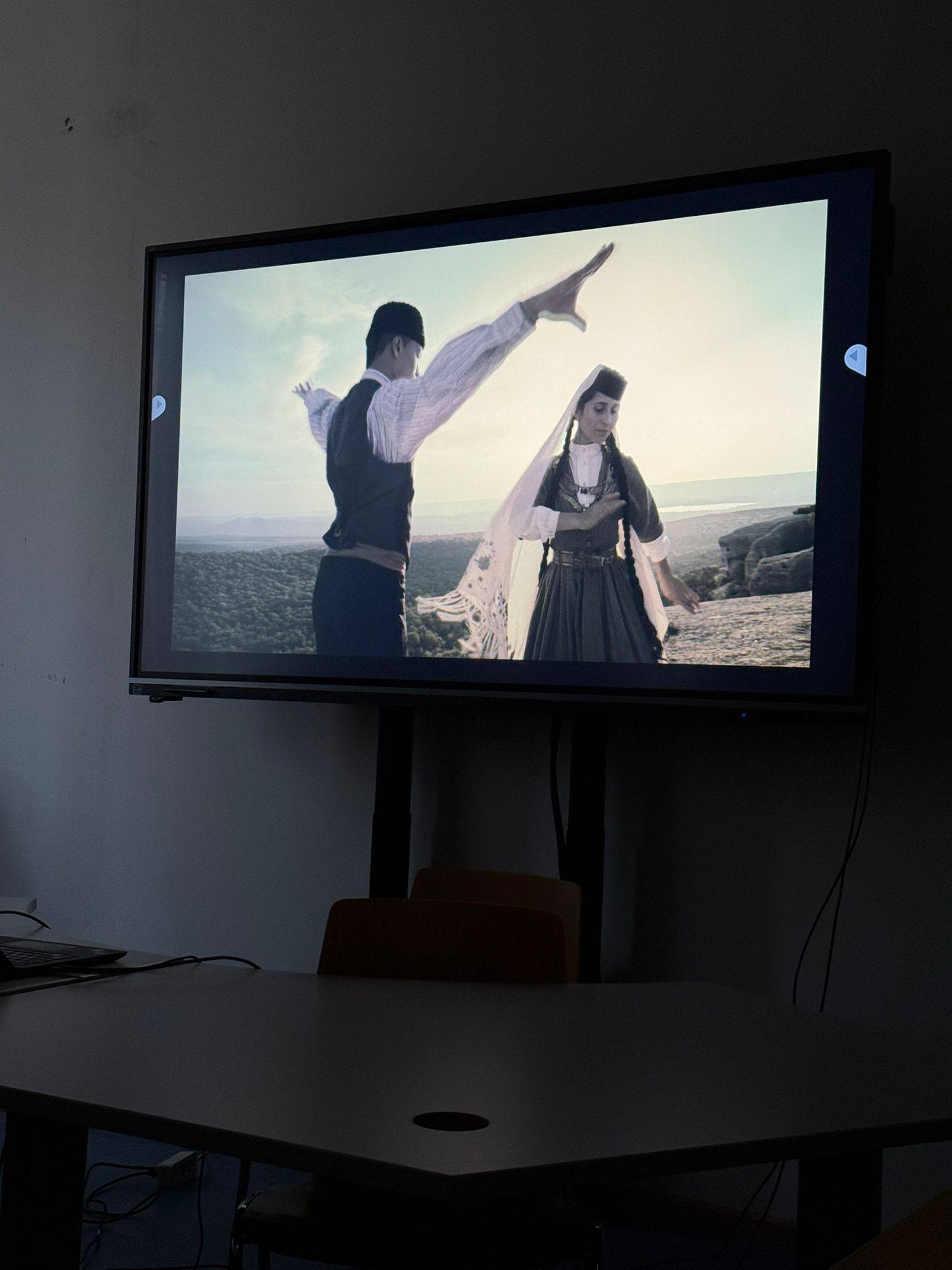
The day reached its emotional peak with a screening of the film “𝐇𝐚𝐲𝐭𝐚𝐫𝐦𝐚,” which depicts the tragic 1944 expulsion of the Crimean Tatars. We were deeply honored to be joined online by the film’s director and lead actor, Akhtem Seitablaiev who took time away from his current film production to engage in a powerful discussion chaired by UFU Chancellor Dmytro Shevchenko.
𝐊𝐞𝐲 𝐢𝐧𝐬𝐢𝐠𝐡𝐭𝐬 𝐟𝐫𝐨𝐦 𝐀𝐤𝐡𝐭𝐞𝐦 𝐒𝐞𝐢𝐭𝐚𝐛𝐥𝐚𝐢𝐞𝐯:
 𝐓𝐡𝐞 𝐖𝐞𝐢𝐠𝐡𝐭 𝐨𝐟 𝐇𝐢𝐬𝐭𝐨𝐫𝐲: Akhtem emphasized that knowing history is not just about the past – it’s about preventing the erasure of our present. “The Russians try to separate us from the European revolution,” he noted, stressing the importance of telling stories that go beyond the trauma of war to show how Ukrainians actually live.𝐓𝐡𝐞 𝐕𝐞𝐭𝐞𝐫𝐚𝐧’𝐬 𝐓𝐡𝐞𝐚𝐭𝐞𝐫: He shared details about his current project – a theater for veterans of the Russian-Ukrainian war. This initiative helps those who have suffered heavy losses return to a “normal life” while demonstrating to the world that Ukraine is not just a place of problems, but a place of resilient, creative life.𝐌𝐨𝐝𝐞𝐫𝐧 𝐑𝐞𝐩𝐫𝐞𝐬𝐬𝐢𝐨𝐧𝐬 𝐢𝐧 𝐂𝐫𝐢𝐦𝐞𝐚: Akhtem drew chilling parallels between the 1944 deportation and today’s “hybrid repressions” under Russian occupation. He noted that while the methods have become more complex, Crimean Tatars remain the primary target of ethnic persecution on the peninsula.𝐎𝐧 𝐭𝐡𝐞 𝐅𝐫𝐨𝐧𝐭𝐥𝐢𝐧𝐞𝐬: Having served in the Armed Forces himself, Akhtem spoke about the many Crimean Tatars currently fighting in the Ukrainian army. He noted that most choose to keep their service private for security reasons, but their presence is a vital part of the unified struggle for freedom.
“𝑾𝒆 𝒂𝒓𝒆 𝒇𝒊𝒈𝒉𝒕𝒊𝒏𝒈 𝒇𝒐𝒓 𝒂 𝒏𝒂𝒕𝒖𝒓𝒂𝒍 𝒍𝒊𝒃𝒆𝒓𝒕𝒚. 𝑰𝒕 𝒊𝒔 𝒗𝒊𝒕𝒂𝒍 𝒕𝒐 𝒕𝒂𝒍𝒌 𝒂𝒃𝒐𝒖𝒕 𝒐𝒖𝒓 𝒉𝒊𝒔𝒕𝒐𝒓𝒚, 𝒃𝒖𝒕 𝒊𝒕 𝒊𝒔 𝒆𝒒𝒖𝒂𝒍𝒍𝒚 𝒗𝒊𝒕𝒂𝒍 𝒕𝒐 𝒕𝒂𝒍𝒌 𝒂𝒃𝒐𝒖𝒕 𝒘𝒉𝒐 𝒘𝒆 𝒂𝒓𝒆 𝒕𝒐𝒅𝒂𝒚, 𝒃𝒆𝒚𝒐𝒏𝒅 𝒕𝒉𝒆 𝒍𝒆𝒏𝒔 𝒐𝒇 𝒘𝒂𝒓.” – Akhtem Seitablaiev
As we closed Day 3, the bridge between the historical deportation of 1944 and the modern fight for Crimea felt shorter than ever. The lesson remains: resilience is found in the truth we tell and the culture we refuse to let vanish.
Text by Dr. Liliia Bondarenko