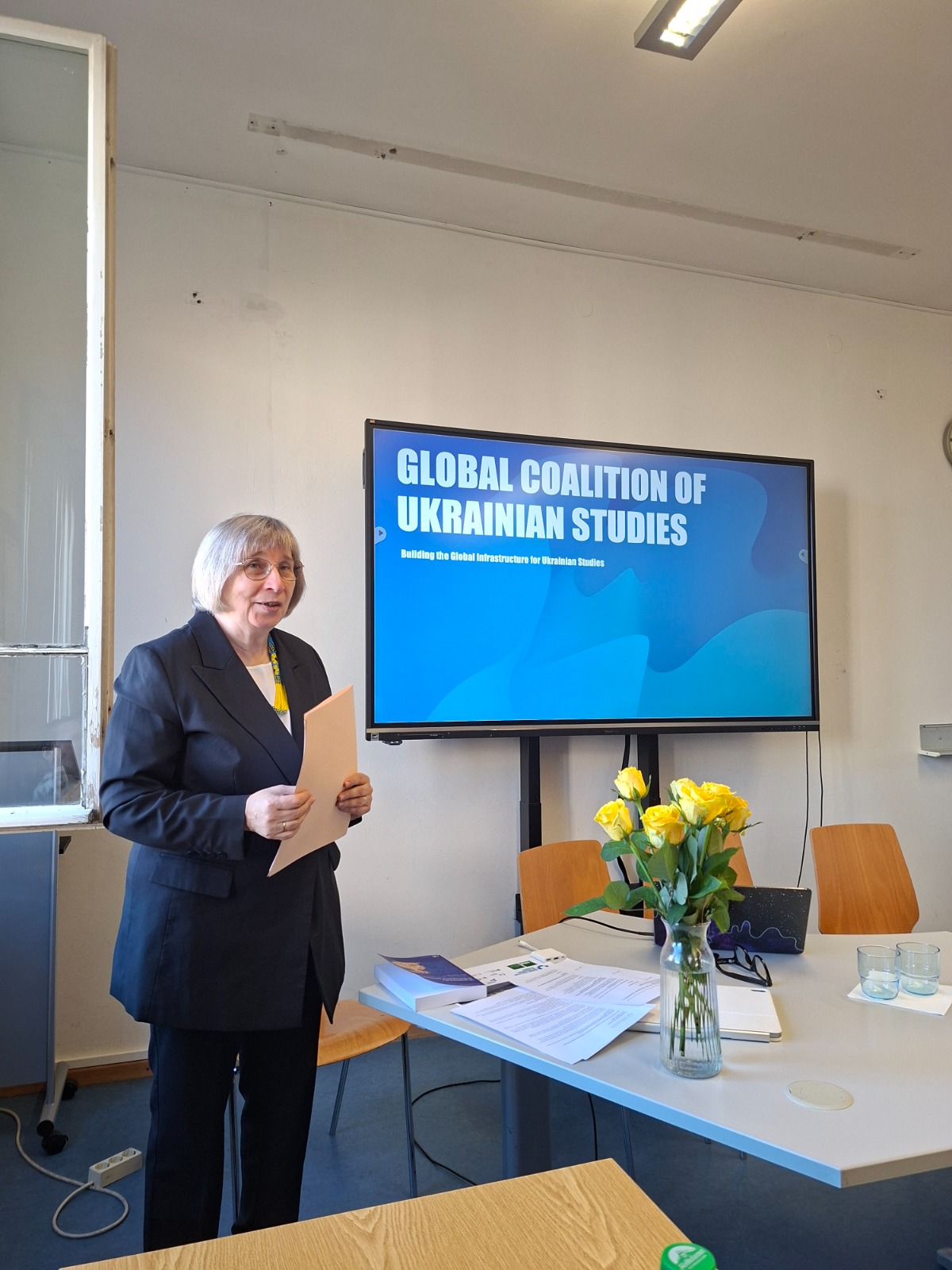
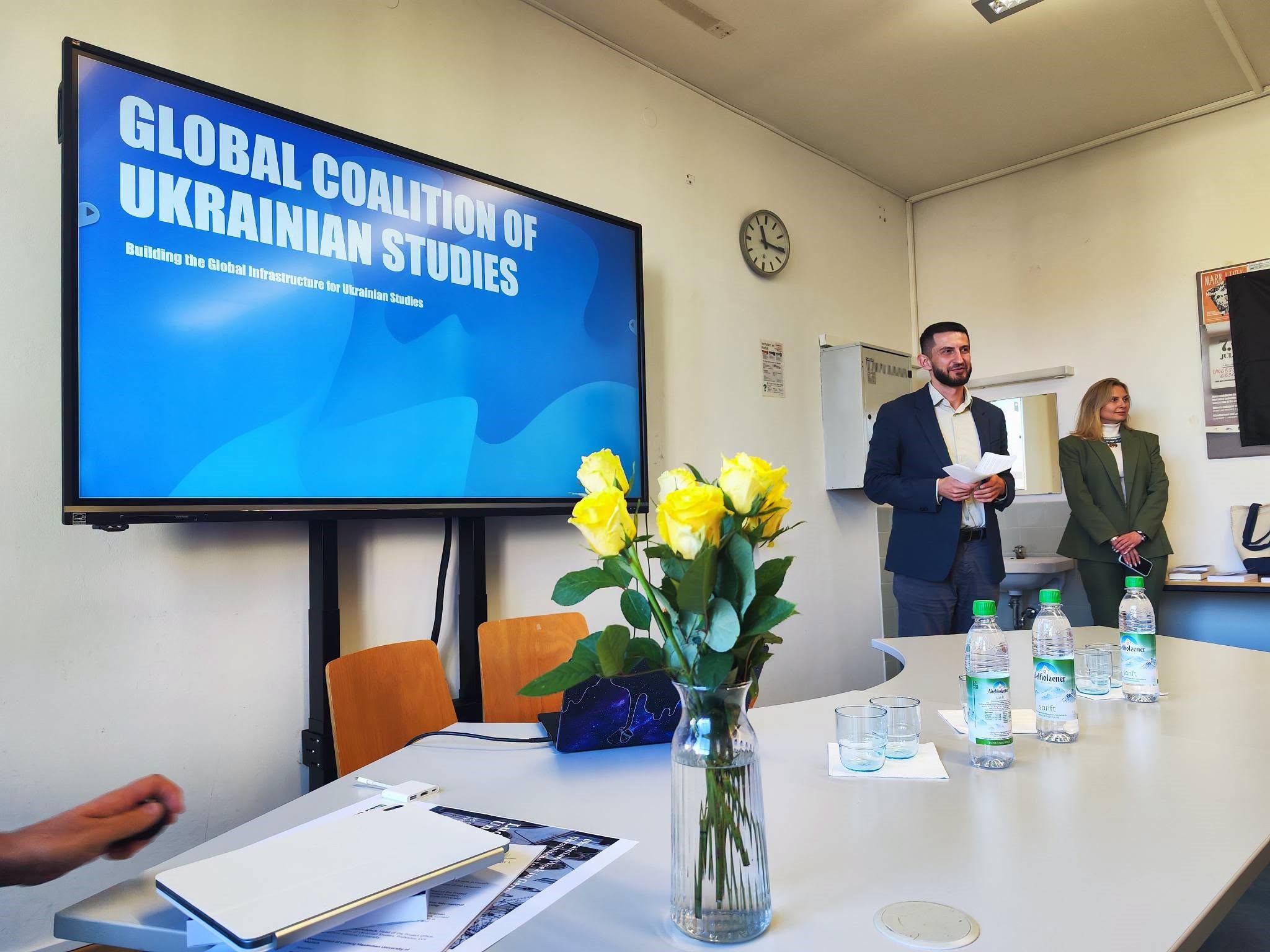
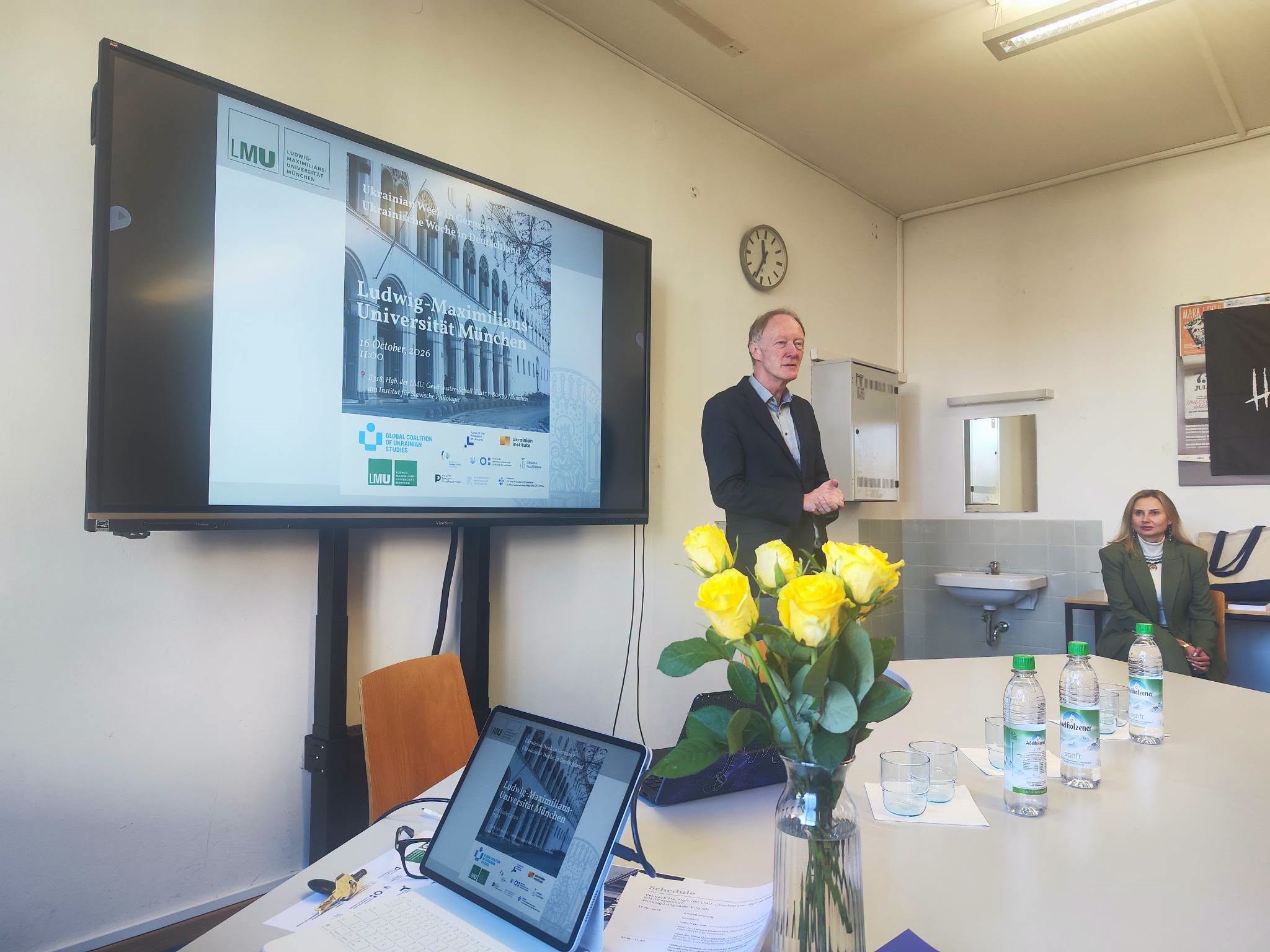
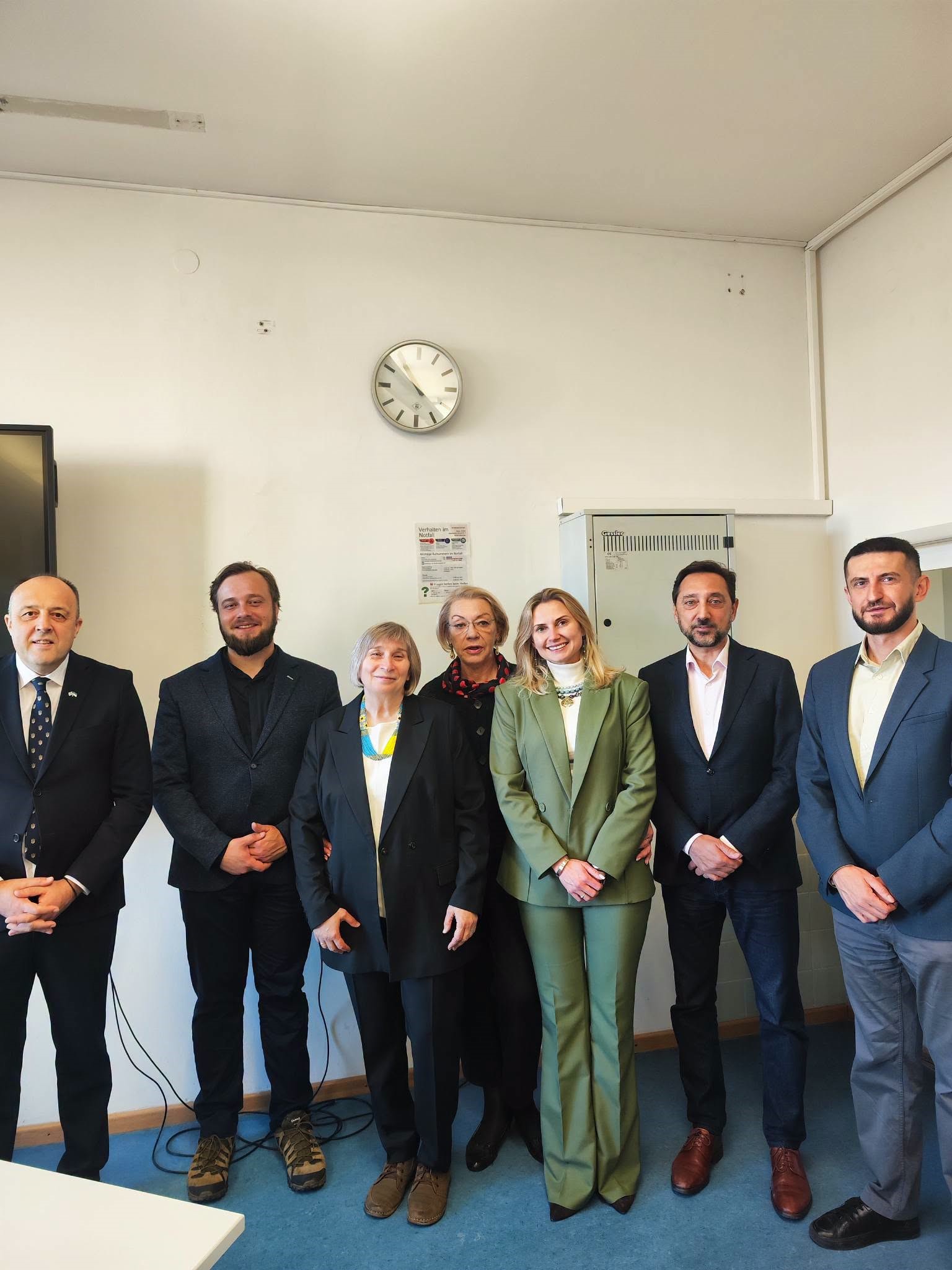
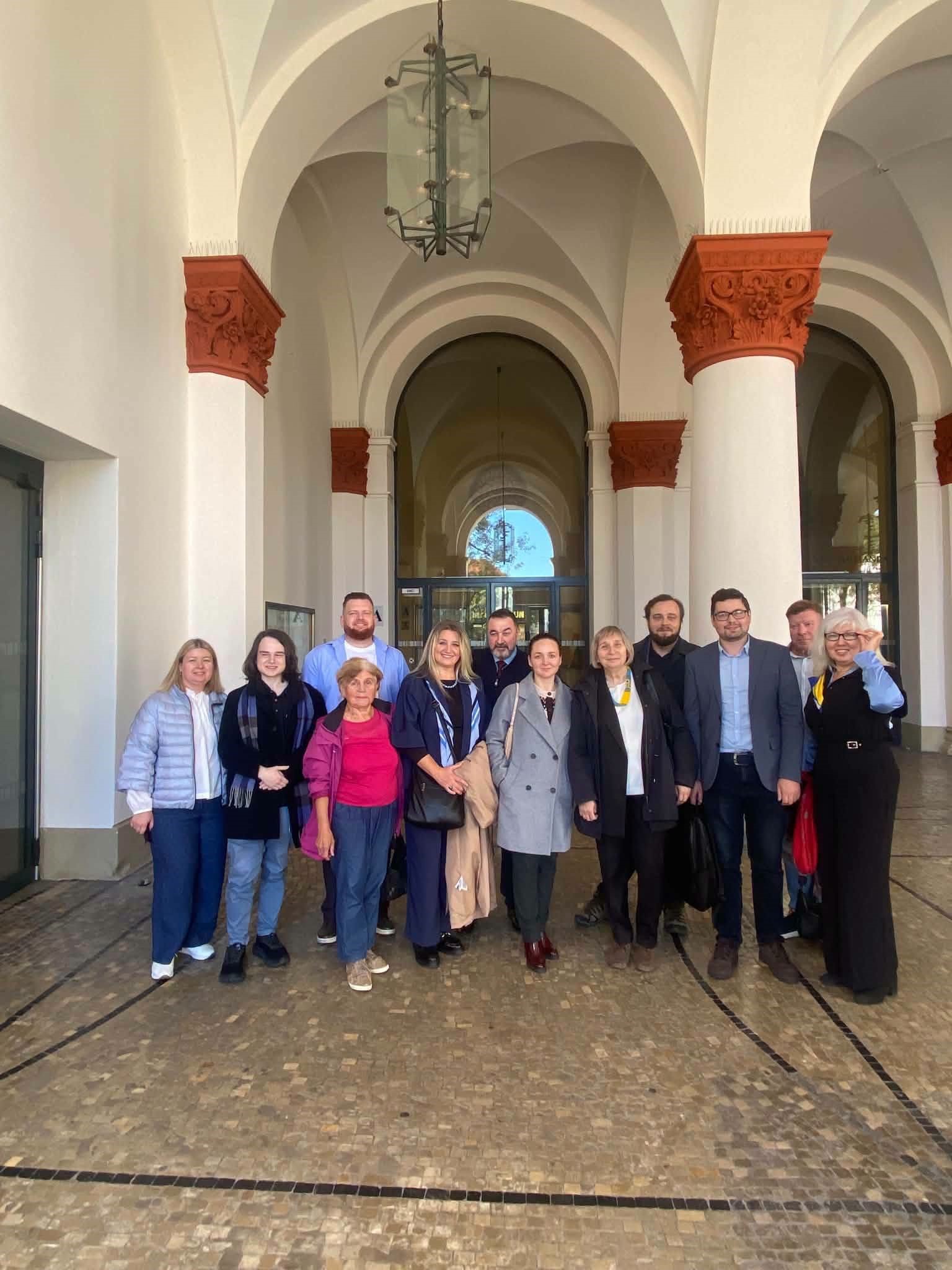
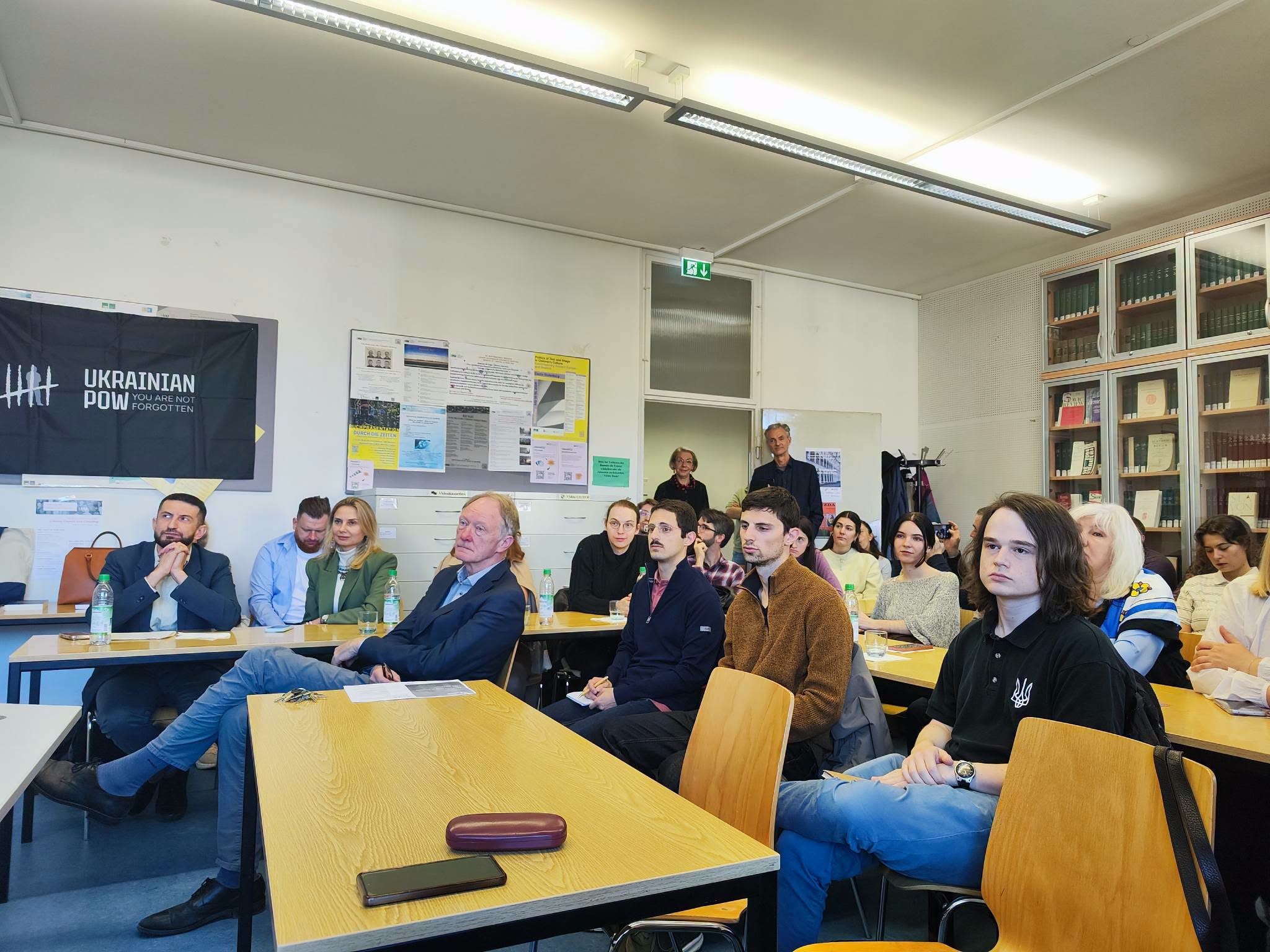
On October 16, 2026, the Institute of Slavic Philology, in cooperation with the History Seminar, Eastern European Studies at Ludwig Maximilian University of Munich, the Ukrainian Free University , and the Global Coalition of Ukrainian Studies hosted a landmark event at LMU’s main building. Dedicated to civic identity, intercultural dialogue, and international academic cooperation, the gathering brought together students, researchers, diplomats, and public figures.
The meeting opened with official welcome addresses by Yurii Nykytiuk, Consul General of Ukraine in Munich, who emphasized shared democratic values and the importance of amplifying Ukraine’s voice in Europe, Prof. Dr. Michael Waltenberger, Vice Dean of the Faculty of Languages and Literatures and Chair of Medieval German Literature at LMU, and Prof. Dr. Martin Schulze Wessel.
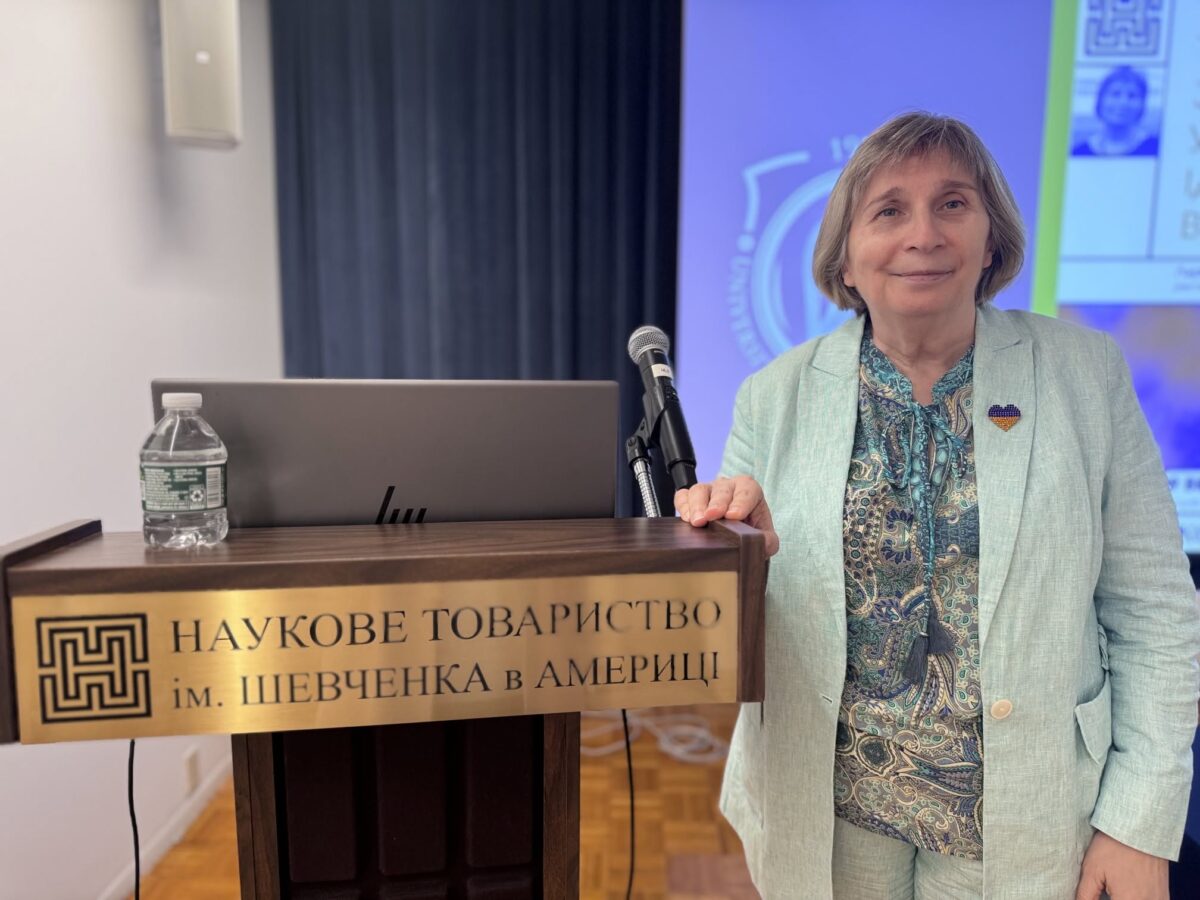
A central moment of the opening session was the solemn address to guests by the Rector of the Ukrainian Free University, Professor Larysa Didkovska. Rector Didkovska highlighted UFU’s unique century-long legacy of preserving and advancing Ukrainian scholarship abroad during times when Ukraine lacked statehood. She emphasized that today, in the face of brutal Russian aggression targeting Ukrainian identity, culture, and history, spreading truthful knowledge about Ukraine globally is more critical than ever. Highlighting UFU’s active participation in the Global Coalition of Ukrainian Studies – including practical initiatives such as the annual Winter School in Ukrainian Studies – Prof. Didkovska called for joint academic projects and a unified vision between Bavarian, German, and Ukrainian universities.
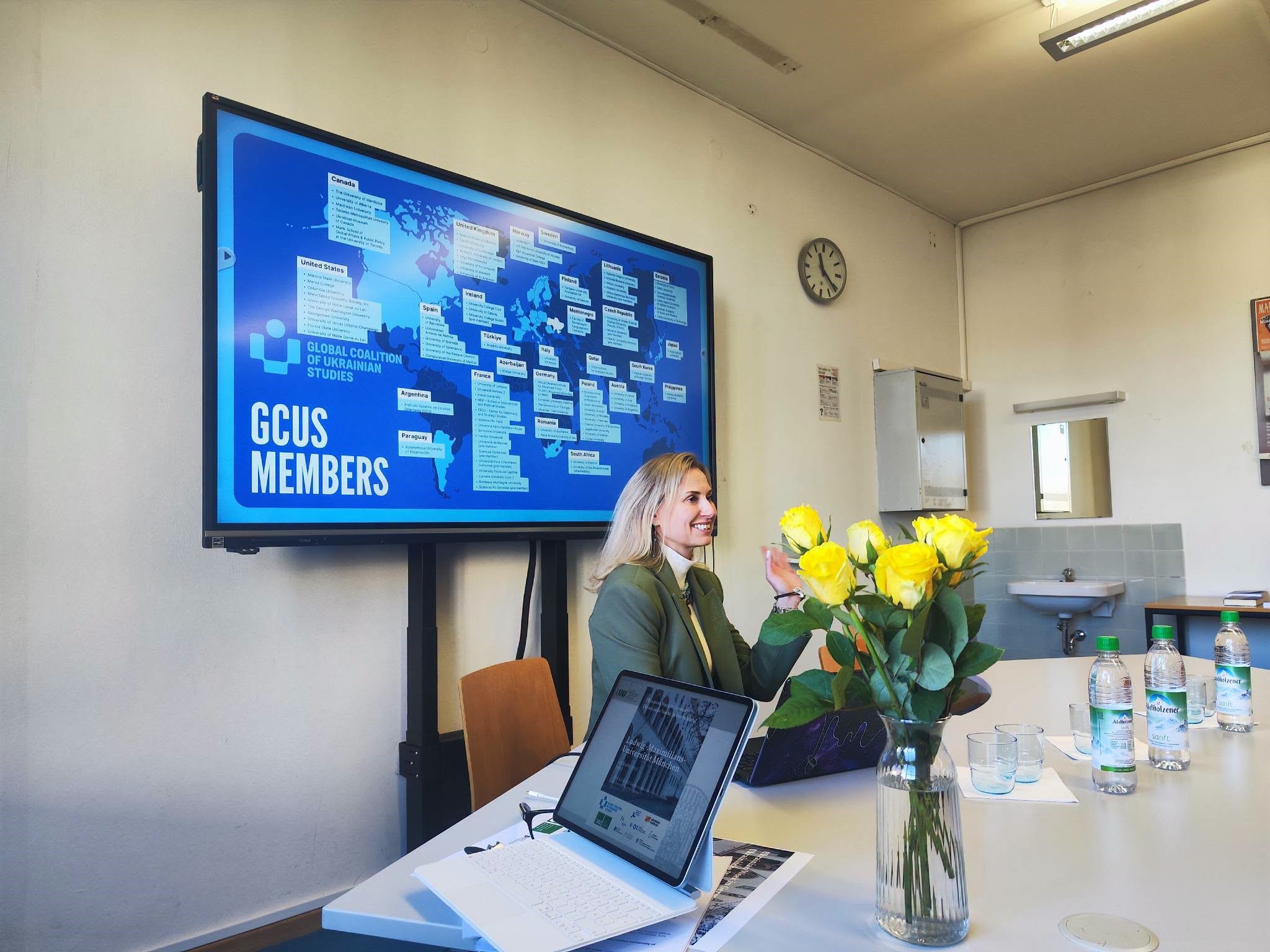
The presentation of the Global Coalition of Ukrainian Studies was delivered by Prof. Dr. Olha Oseredchuk, Head of the GCUS Project Office (Lviv Polytechnic National University), and Alim Aliev, Deputy Director General of the Ukrainian Institute. They introduced GCUS’s growing global network connecting over 100 universities across 28 countries, offering interdisciplinary courses, educational case studies, and resources spanning STEM, humanities, and security studies.
LMU’s long-standing research and academic initiatives in Ukrainian studies were presented by Prof. Dr. Riccardo Nicolosi, Chair of Slavic Philology (Literary Studies), and Dr. Felix Jeschke. They outlined existing projects, such as the German-Ukrainian Historical Commission, and announced a new academic Certificate Program in Ukrainian Studies starting at LMU.
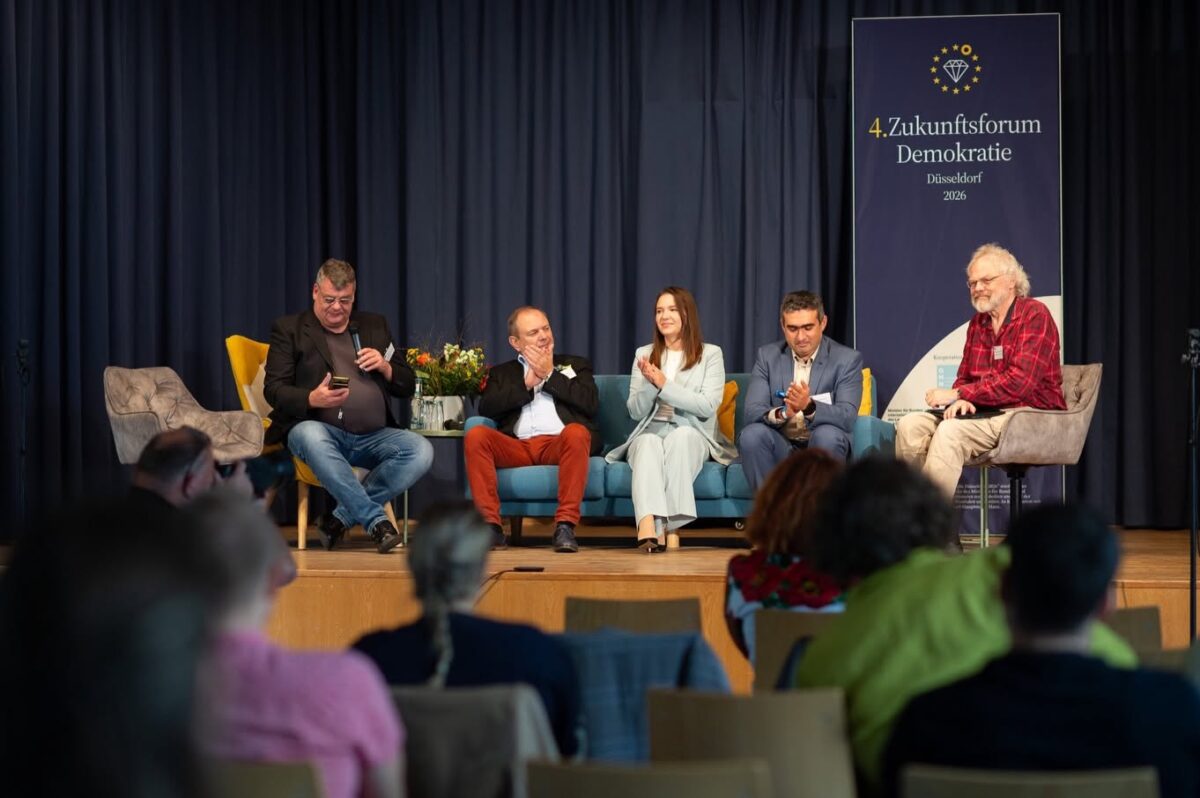
The event culminated in an engaging panel discussion titled “What Holds a Diverse Society Together? Civil Identity, Intercultural Dialogue, and Shared Responsibility”. Moderated within an interdisciplinary framework, the discussion featured:
▪️Alim Aliev – Deputy Director General of the Ukrainian Institute (Ukrainian Institute – Український інститут), human rights advocate, and co-founder of Crimea SOS (Крим_ SOS);
▪️Dr. Roman Nazarenko – Director of the Institute of Religion and Society at the Ukrainian Catholic University (Український католицький університет UCuniversity) and Senior Lecturer at the National Academy of the SBU;
▪️Ostap Ukrainets (Остап Українець) – writer, translator, co-founder of the “Tvoja Pidpilna Humanitarka” educational project (Твоя Підпільна Гуманітарка), and soldier of the Armed Forces of Ukraine.
The panellists explored how Ukraine’s internal cultural, religious, and regional diversity – including Crimean Tatar heritage – acts as a unifying force and a source of social resilience in times of existential struggle.
As an institution that has sustained Ukrainian higher education in exile for over a century, the Ukrainian Free University continues to actively build academic bridges between Ukraine and Europe.
✍️ Dr. Liliia Bondarenko (Лілія Бондаренко), Ukrainian Free University